How to play
Buck The Trend is by Jonathan Leistiko: invisible-city.com/content/buck-trend. This is his game on screens; the app keeps the score sheet.
Call each roll: over, under, or spot-on the last one. Being right pays; being right when most of the table was wrong pays more. End the game with the most points.
The sheet
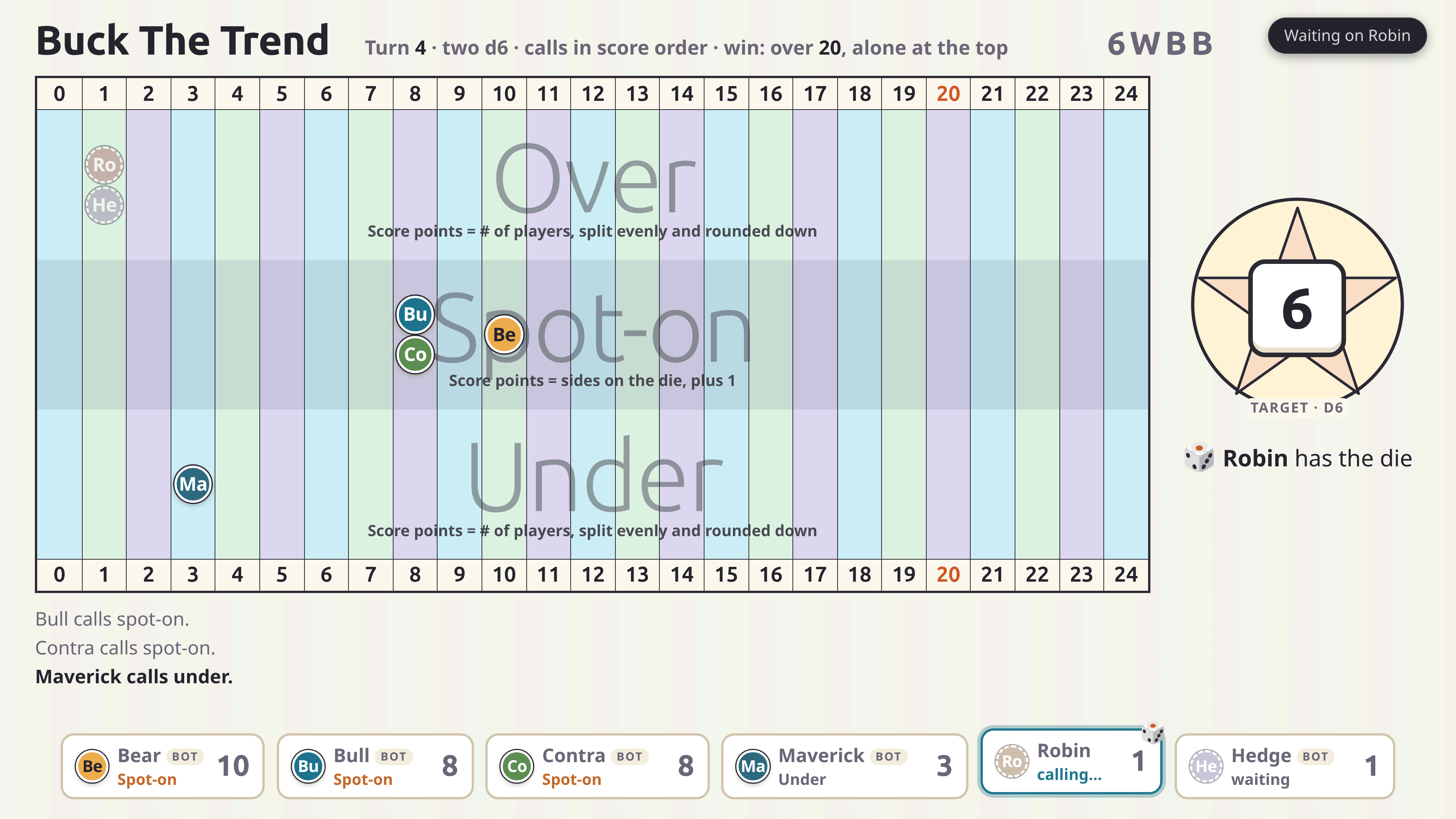
- Everyone has a pawn on a score track numbered 0 to 24, in one of three rows: Over, Spot-On or Under. Every pawn starts at 0 in the Spot-On row.
- Two dice with the same number of sides: two d6 in the standard game. One sits on the star: that is the target die. The player holding the other one rolls next.
A turn
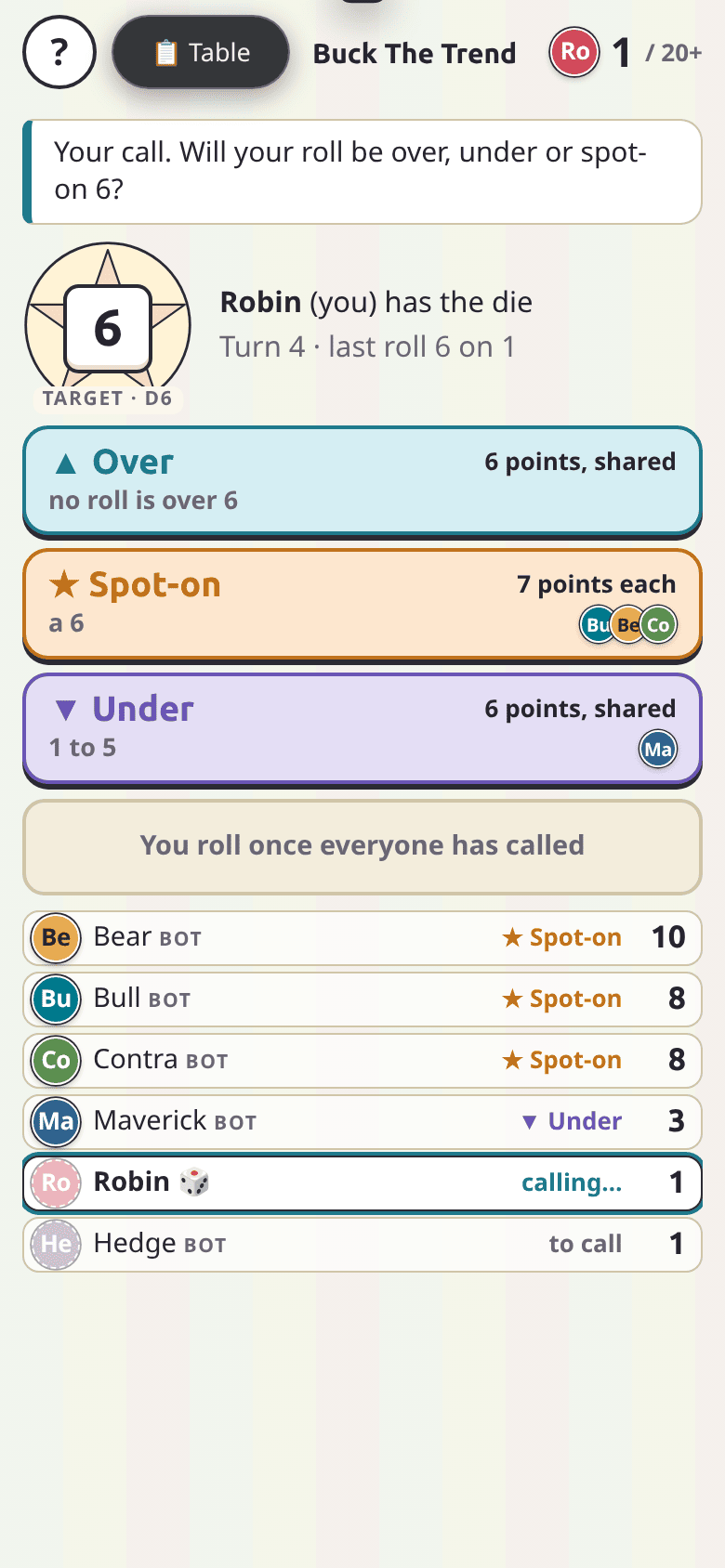
- Call it. Starting with the highest score and going down, each player moves their pawn to the row they predict: will the die holder's roll be over the target, under it, or spot-on? Everyone calls, the die holder too, and everyone sees each call as it is made. Equal scores start with the die holder and go clockwise.
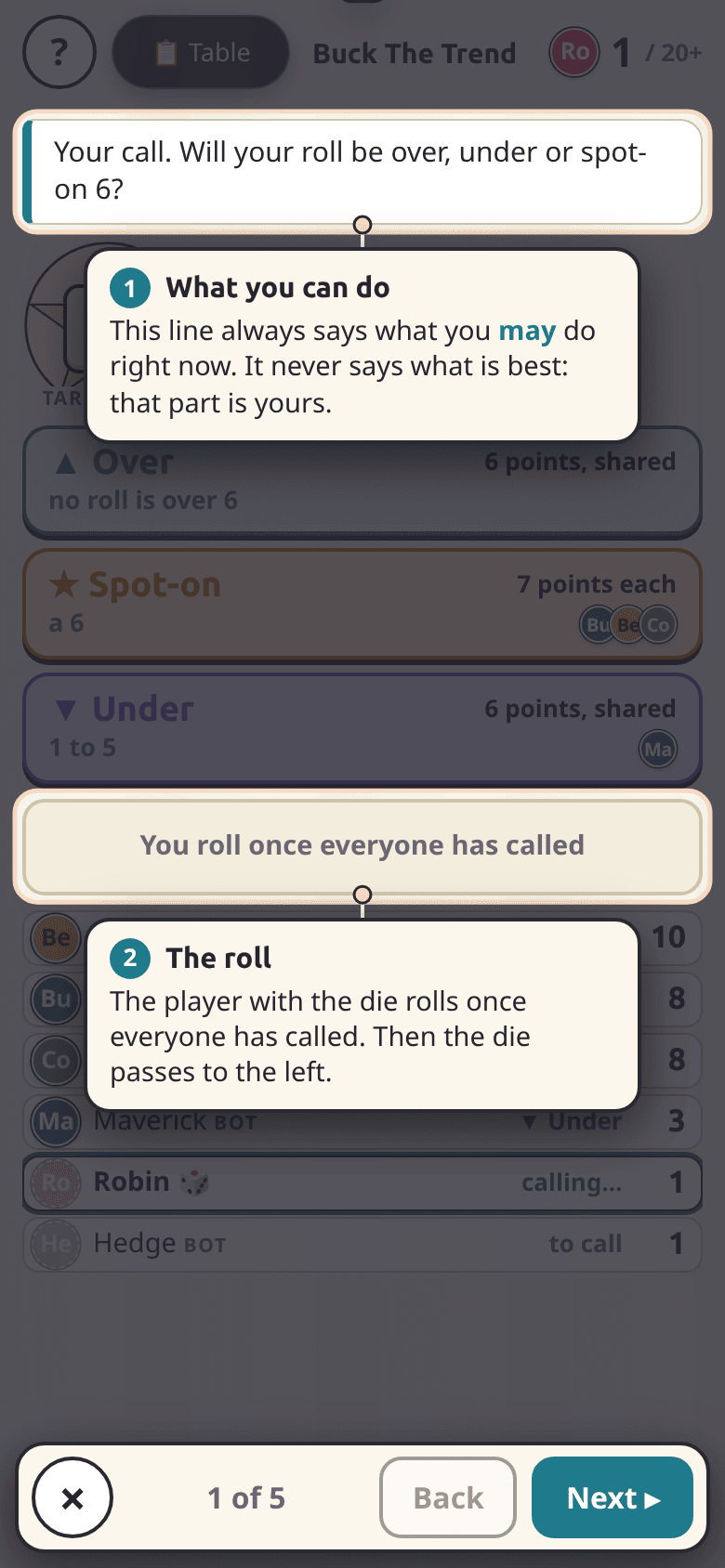
- Roll. Once everyone has called, the die holder rolls.
- Score. Spot-on, if you called it: the sides on the die plus one (7 with a d6), to every player who called it. Over or under, if you called it: the number of players, split among everyone who called the same, rounded down. With five players and three of you right on over, each of you gets 1. A wrong call scores nothing and costs nothing.
- Pass it on. The roll becomes the new target, and the die goes to the player on the left of whoever rolled.
The end
- When a turn ends with at least one player over 20 and only one player at the top, that player wins. A tie at the top plays on.
Choices in the lobby
- Dice: two d4, d6 (standard), d8, d10, d12 or d20. More sides make spot-on rarer and worth more.
- Calls: in score order and in the open (the rules), or all at once and secret until everyone is in. Secret calls can be changed until the last one is in.
Good to know
- The phone says which rolls make each call right (facts), never which call is best.
- Bots fill empty seats (4 seats at least, 12 at most) and play through the same door: they see what a player sees.
- If your phone sleeps, your seat waits. A bot covers for you only after five minutes, with a clock on screen first, and one tap takes the seat back.